
Appendicitis in Children: Signs You Shouldn't Ignore
Stomach aches are a normal part of childhood, but how do you know when it is something more serious? Appendicitis is a pediatric medical emergency. Learn how to spot the early warning signs, understand when to rush to the hospital, and what the surgical treatment involves.

What Is Appendicitis?
The appendix is a small, finger-shaped pouch attached to the large intestine on the lower right side of the belly. Appendicitis happens when this pouch becomes blocked and infected. As bacteria multiply rapidly, the appendix becomes inflamed, swollen, and filled with pus.
It is one of the most common reasons a child needs emergency abdominal surgery. While it can happen at any age, it is most frequently seen in children and teenagers between the ages of 10 and 19. Because kids often have trouble describing exactly how they feel, diagnosing it early requires parents to be highly observant.
Signs You Shouldn't Ignore
Appendicitis usually progresses quickly over 24 to 48 hours. The most classic symptom is abdominal pain that changes and moves. Watch for these red flags:
The "Moving" Pain: The pain often starts as a dull ache around the belly button. Over a few hours, it typically shifts to the lower right side of the abdomen and becomes sharp and constant.
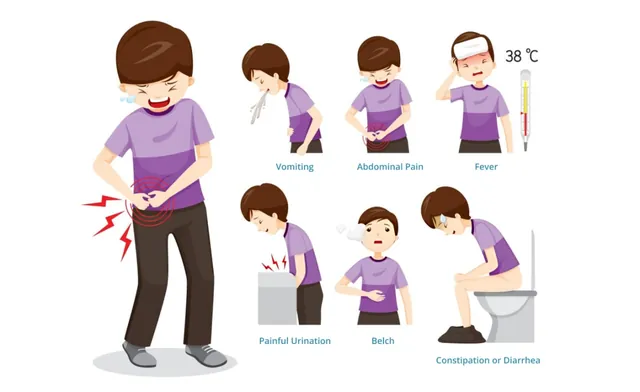
Pain With Movement: The pain usually gets noticeably worse when the child walks, jumps, coughs, or even takes a deep breath. You might notice them bending over or lying completely still with their knees pulled up to their chest.
Fever and Nausea: A low-grade fever, accompanied by a loss of appetite, nausea, and vomiting, often follows the onset of stomach pain.
Rebound Tenderness: If you gently press on the lower right side of their belly and quickly release it, the pain will sharply increase as you let go.
Why Is It an Emergency?
Appendicitis must be treated quickly because an infected appendix can rupture (burst) within 48 to 72 hours after symptoms begin. If it bursts, the infection spills into the entire abdominal cavity — a severe and potentially life-threatening condition known as peritonitis. Early detection and surgery are critical to prevent this complication.
How Is It Diagnosed?
Because the symptoms can mimic other issues like gastroenteritis (stomach flu) or a severe UTI, a paediatric surgeon will perform a careful physical examination. They will often order an abdominal ultrasound to look for a swollen appendix, and blood tests to check for an elevated white blood cell count, which indicates an active infection.
What Does the Surgery Involve?
The standard treatment for appendicitis is the surgical removal of the appendix, called an appendectomy.
Today, this is most commonly done as a laparoscopic (keyhole) surgery. Under general anaesthesia, the surgeon makes a few tiny incisions in the abdomen, uses a camera to guide the instruments, and safely removes the infected appendix. This minimally invasive approach means less pain, smaller scars, and a much faster recovery.
If the appendix was caught early and had not ruptured, most children can go home within 24 hours of the surgery and return to normal activities within one to two weeks. If the appendix had ruptured, they will need to stay in the hospital a few days longer for intravenous (IV) antibiotics.
What Parents Should Do
Never ignore severe abdominal pain, especially if it settles in the lower right side. Do not give your child pain medication or a heating pad before seeing a doctor, as this can mask the symptoms and make diagnosis much harder. If you suspect appendicitis, take your child to the hospital emergency department immediately.
Treatment at the chamber: Appendicitis in Children
Also searched as: appendicitis in kids, signs of appendicitis in children
Have concerns about your child's health? Consult Dr. Zannatul Ferdous Peu
SIBL Foundation Hospital, Panthapath — Saturday – Thursday: 3:00–9:00 PM
Emergency: 01991-150900 · SIBL Foundation Hospital 24/7 hotline
This page is for general education and is not a substitute for a medical consultation. Medical Disclaimer