Hydrocele (Ekshira) in Children: What It Is, Why It Happens and When Surgery Is Needed
A hydrocele is fluid around the testis that makes the scrotum swell. In babies it often goes away by itself. Learn how it differs from a hernia, home care myths, and when an operation is advised.

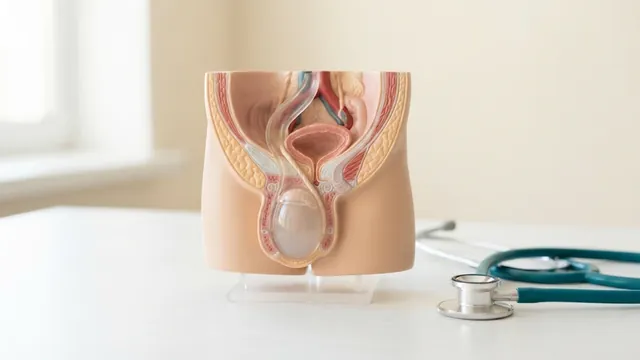
Hydrocele (ekshira) shown on an anatomical teaching model: fluid around the testis
What is a hydrocele?
A hydrocele is a collection of fluid around the testis, which makes one or both sides of the scrotum look swollen. In Bangladesh it is often called ekshira (একশিরা). It is common in newborn boys and is usually painless.
Why does it happen in children?
Before birth, the testis moves down from the tummy into the scrotum through a small channel. This channel normally closes. If it stays open, fluid from the tummy can trickle down and collect around the testis. This is the same channel that causes an inguinal hernia in children, which is why the two are closely related.
Types of hydrocele
- Non-communicating hydrocele: the channel has closed, the fluid stays the same size and is usually absorbed by the body within the first 1–2 years.
- Communicating hydrocele: the channel is still open, so the swelling gets bigger during the day or when the child cries, and smaller after sleep.
Hydrocele or hernia: how can I tell?
A hydrocele is a smooth, soft swelling in the scrotum that does not usually change quickly. A hernia is a bulge in the groin that may go up into the scrotum, often appears with crying or straining, and may disappear when the child relaxes. Only an examination, sometimes with an ultrasound, can tell them apart for sure.
When should I see a doctor urgently?
- The swelling becomes hard, painful, red or cannot be pushed back
- Your child is vomiting or has a swollen tummy with the swelling
- Sudden pain in the testis
These can mean a trapped hernia or a twisted testis, which are emergencies.
Does home treatment work?
No. Oils, massage, hot compresses, tight underwear or herbal remedies do not close the channel and can harm the skin. In babies, the right approach is to wait and watch with regular check-ups.
When is surgery needed?
- The hydrocele is still present after about 1–2 years of age
- It is a communicating hydrocele that changes in size
- It appears for the first time in an older child
- A hernia is present as well
What does the operation involve?
The operation is done under general anaesthesia, usually as a day case. Through a small cut in the groin crease, the surgeon closes the open channel and drains the fluid. Most children go home the same day and return to normal play within a few days. Your surgeon will explain the risks, which are low but include infection and the hydrocele coming back.
Key takeaway
A painless hydrocele in a baby is common and often goes away on its own. Get it checked, avoid home remedies, and see a pediatric surgeon if it lasts beyond 1–2 years, changes size, or becomes painful.
If the doctor advises an operation for a hydrocele or a groin hernia, this is what it involves at the chamber. Child hernia and hydrocele surgery in Dhaka →
Treatment at the chamber: Hernia & Hydrocele
Also searched as: hydrocele ki, ekshira, hydrocele in baby boy, hydrocele surgery in Dhaka
Have concerns about your child's health? Consult Dr. Zannatul Ferdous Peu
SIBL Foundation Hospital, Panthapath — Saturday – Thursday: 3:00–9:00 PM
Emergency: 01991-150900 · SIBL Foundation Hospital 24/7 hotline
This page is for general education and is not a substitute for a medical consultation. Medical Disclaimer