
Tongue-Tie (Ankyloglossia) in Babies: Does My Child Need Treatment?
Is your newborn struggling to breastfeed, making a clicking sound, or causing you pain during nursing? It could be a tongue-tie. Learn how to spot the signs of ankyloglossia, when a simple surgical release is necessary, and when it is safe to wait.

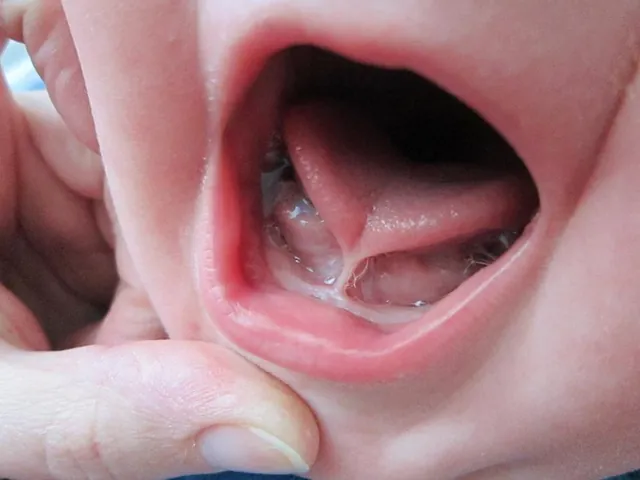
What Is a Tongue-Tie?
Lift your tongue and look in a mirror. You will see a small band of tissue connecting the bottom of your tongue to the floor of your mouth. This is called the lingual frenulum. In a baby born with a tongue-tie (medically known as ankyloglossia), this band of tissue is unusually short, thick, or tight.
This tightness restricts the tongue's range of motion. Because a baby's tongue needs to extend out over their lower gum line to create a proper vacuum for feeding, a tongue-tie can make nursing incredibly difficult for both the baby and the mother.
Signs Your Baby Might Have a Tongue-Tie
A tongue-tie is often first suspected when a mother and baby run into breastfeeding difficulties. Watch for these common signs:
In the Baby:
- Struggling to latch on or constantly losing the latch.
- Making a distinctive "clicking" or smacking sound while nursing.
- Prolonged feeding sessions that leave the baby exhausted and still hungry.
- Poor weight gain or failure to thrive.
- A tongue that looks heart-shaped or notched at the tip when they cry.
In the Mother:
- Severe, persistent nipple pain or damage during and after feeding.
- Engorgement or mastitis caused by the breasts not being emptied effectively.
Does It Always Need to Be Treated?
Not necessarily. Not all tongue-ties cause problems. If your baby has a visible tongue-tie but is feeding well, gaining weight normally, and mom is not in pain, surgery is generally not required. Many mild tongue-ties loosen on their own as the child grows.
However, if the tongue-tie is causing functional problems—like severe feeding difficulties in infancy or speech articulation issues (trouble pronouncing sounds like "t," "d," "z," "s," "th," "r," and "l") as the child gets older—treatment is highly recommended.
What Is the Treatment?
If treatment is needed, it is a very simple, quick, and safe procedure called a frenotomy (or tongue-tie release). It is routinely performed by a paediatric surgeon.
For young babies, the procedure takes just a few seconds. The surgeon examines the frenulum and then uses sterile scissors to snip the tight band of tissue. Because there are very few nerve endings or blood vessels in the frenulum, the procedure causes very little pain and only a drop or two of blood. Most babies can breastfeed immediately after the procedure, and mothers often notice an instant improvement in the latch.
For older children who need a release, the procedure might require a few stitches and is usually done under general anaesthesia to keep them completely still and comfortable.
When to Seek Help
If you are experiencing pain during breastfeeding or are concerned your baby isn't getting enough milk, start by consulting a lactation specialist or your pediatrician. If they suspect a tongue-tie is the culprit, an evaluation by a paediatric surgeon will help determine if a simple release is the best step forward for your baby's health and your peace of mind.
Treatment at the chamber: Neonatal Surgery
Also searched as: tongue tie, ankyloglossia, ankyloglossia treatment, tongue tie in infants, tongue-tie surgery in Dhaka
Have concerns about your child's health? Consult Dr. Zannatul Ferdous Peu
SIBL Foundation Hospital, Panthapath — Saturday – Thursday: 3:00–9:00 PM
Emergency: 01991-150900 · SIBL Foundation Hospital 24/7 hotline
This page is for general education and is not a substitute for a medical consultation. Medical Disclaimer